

For HR leaders, benefits administration is often measured by what employees do not experience: missing coverage, payroll deduction errors, delayed enrollments, or carrier billing disputes. Yet behind the scenes, many organizations still rely on spreadsheets, carrier portals, and manual data entry to keep eligibility information synchronized. Automated Electronic Data Interchange (EDI) feeds replace those manual handoffs with a controlled process that moves eligibility and enrollment data between payroll, HRIS, benefit administration platforms, and insurance carriers.
The value of EDI is not simply the transmission of a file. It is the creation of a repeatable, monitored data supply chain. When employee status changes, new hires, terminations, dependent updates, and qualifying life events move through predefined rules and into carrier systems with less manual intervention. This reduces rework, improves data accuracy, and creates greater confidence in the benefits program.
A composite 100-employee employer model illustrates the financial impact. The strongest savings drivers typically come from four areas: reduced administrative labor, lower premium leakage, fewer employee service issues, and fewer payroll correction events. Together these factors generated an estimated annual gross value of nearly $20,000 in the example model.
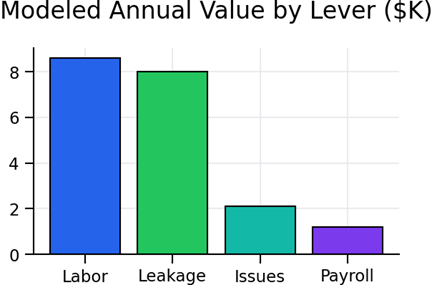
Figure 1. Estimated annual value generated through automation by savings category.
While financial benefits matter, the employee experience is often where HR leaders see the greatest impact. Employees rarely ask whether their employer has an EDI feed. They care whether coverage is active when they need medical care, whether dependents are enrolled correctly, and whether payroll deductions align with elections. Automated feeds reduce the risk that errors remain hidden until an employee files a claim or notices a payroll issue.
Implementing EDI should be approached as an operational improvement initiative rather than a technology project. Successful implementations begin with validating eligibility rules, plan codes, payroll timing, effective dates, and carrier specifications. During testing, organizations should include real-world scenarios such as new hires, terminations, dependent additions, waived coverage, and retroactive changes. A parallel testing period allows HR teams to compare automated outputs against existing carrier rosters before moving into production.
Leaders should also establish ownership for exception management. Even the most effective automation environment will occasionally generate rejected records or mismatched data. The difference between a successful and unsuccessful EDI program is not whether exceptions occur, but whether they are identified, assigned, and resolved quickly.
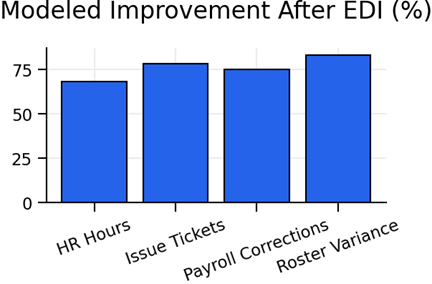
Figure 2. Modeled operational improvements after EDI implementation.
After implementation, organizations should monitor a small set of operating metrics, including feed acceptance rates, carrier roster variances, payroll correction volume, employee issue tickets, and exception resolution times. Tracking these indicators helps ensure that automation remains aligned with business objectives and provides leadership with an ongoing measure of return on investment.
HR leaders evaluating EDI should ask a simple question: Is the organization spending time correcting preventable issues rather than serving employees? If monthly reconciliation, recurring carrier discrepancies, or benefits-related employee escalations are common, automation may represent more than an efficiency improvement. It may be a governance, compliance, and employee experience enhancement.
Ultimately, automated EDI feeds create trust. Business leaders gain visibility and control, HR teams reclaim valuable administrative time, and employees benefit from a more reliable benefits experience. When implemented with strong testing, clear ownership, and ongoing monitoring, EDI can transform benefits administration from a reactive process into a predictable operating model.

COMMENTS